


How do the events that happen to a tiny, unaware little baby have long-term impact?
Babies eat, sleep and poop on repeat for the first few months, seemingly oblivious of the stressors of life around them. And yet, if you were able to look “under the hood” of your little baby’s brain and growing body, you would be astounded to see the construction of the foundation being laid. Though a newborn has limited eyesight, possesses no language skills, and has very little conscious awareness of the world around them, it is absorbing and growing internally faster than at any other time in development.
This is why postpartum support matters so deeply and why it must go beyond a postpartum massage, a checklist of basic postpartum essentials, or even a well-prepared postpartum kit..
And as a clinical counsellor who works primarily with children impacted by complex trauma, I see the downstream effects of unsupported early experiences. That’s why I believe so strongly that upstream prevention is the most powerful way to protect children and families and ultimately create healthy communities.
Key Takeaways:
- Postpartum care is not just support for a moment, it shapes long-term mental health and resilience. What happens in the first weeks of life helps form how stress is experienced and managed over time. When postpartum care is present, both mothers and babies are more likely to build the foundation for emotional regulation, connection, and stability.
- A poverty of relationships in early motherhood increases risk, postpartum care restores the village. Many mothers today are raising babies in isolation, without the guidance, reassurance, and practical help that once came from extended family and community. Postpartum care helps close that gap, reducing loneliness, increasing maternal capacity, and creating healthier environments for both mother and child.
- If we want to reduce crisis later – from anxiety to homelessness – we must invest in postpartum care early. Many long-term challenges are linked to early, unsupported stress. Postpartum care is a form of prevention: it strengthens families at the beginning, reducing the likelihood of compounded stress, mental health struggles, and instability later in life.
- Postpartum care is often reduced to physical recovery tools like postpartum essentials, a postpartum kit, or services like postpartum massage – but true care must also address emotional and relational needs.
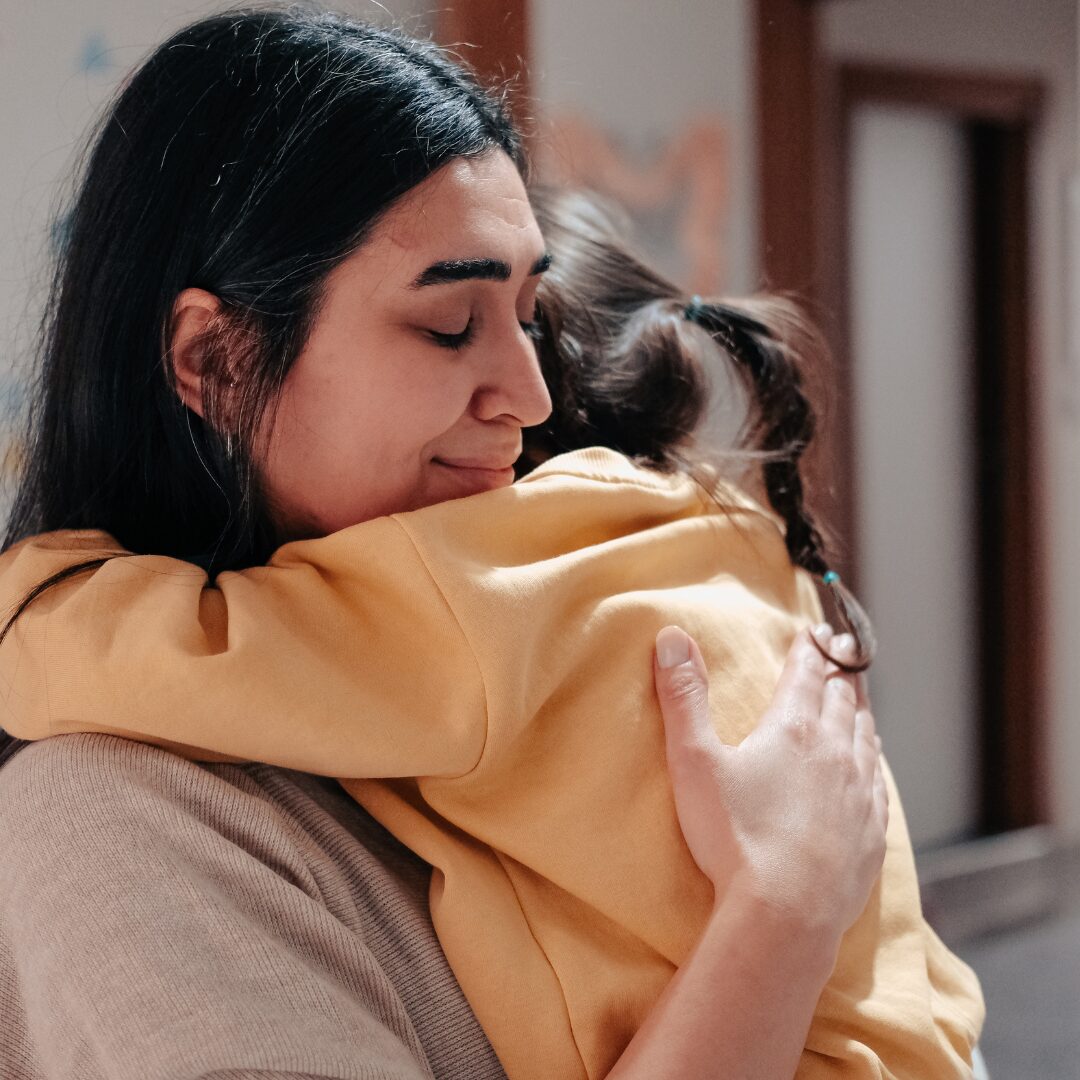
Postpartum support and the ripple effect: why mothers lack support
Becoming a mother is a life-changing transformative experience.
I have 4 children who came to me through adoption and biologically, and each new child brought into my world shook my foundation. Each experience was unique, from the incredible power of my body delivering a baby, to the elation and relief of seeing the final paperwork for the adoption, to the awe of how my milk came in to nourish my babies, to the intense emotional experience of primal protectiveness, to intense loneliness or frustration in the wee hours of many early morning feeds, to complete overwhelm of all encompassing love and joy as I snuggled each child.
The highs and lows of my experience aren’t unique, but what is unfortunately becoming increasingly rare, is to enter motherhood and experience some of the highest highs and lowest lows of your life, feeling isolated and alone.
And though we don’t have exact numbers on how many postpartum mothers feel alone we can gather a clear, and unfortunately, dismal picture from research on loneliness and mental health:
- 1 in 10 of all Canadians report they are always or often lonely
- According to 2024 survey 66% of parents feel isolated or lonely
- Almost 2 in 5 parents (38%) feel there is no one to support them in their parenting
- According to a different 2018 survey, almost half (49%) of mothers between 18-25 and 37% of mothers between 26 and 30, were almost always lonely.
- In Canada, 81% of single-parent families are led by mothers, and people in single-parent families are four times more likely to live in poverty than those in two-parent families.
Studies show that mothers without strong support systems experience higher rates of stress, depression, and isolation, particularly during pregnancy and the postpartum period.
For mothers who have no partner, friends, or family nearby, the “village” that once supported mothers simply does not exist. Caring for a newborn, even with being supported, is incredibly demanding. Doing it alone is even harder.
But the challenge goes beyond loneliness, where someone understands your experience and helps you feel seen and heard. It’s also deeper than sharing the mental or physical load of caring for a baby.
Part of the human experience, especially in early parenthood, is the feeling of relief when you hear, “that’s confusing for me too” or “this helped with my baby” or “don’t worry, that’s normal” or “do worry, that’s not normal.” It’s about being held by the wisdom of other parents who not only understand, because they have walked the same road, but who also have valuable knowledge to pass on.
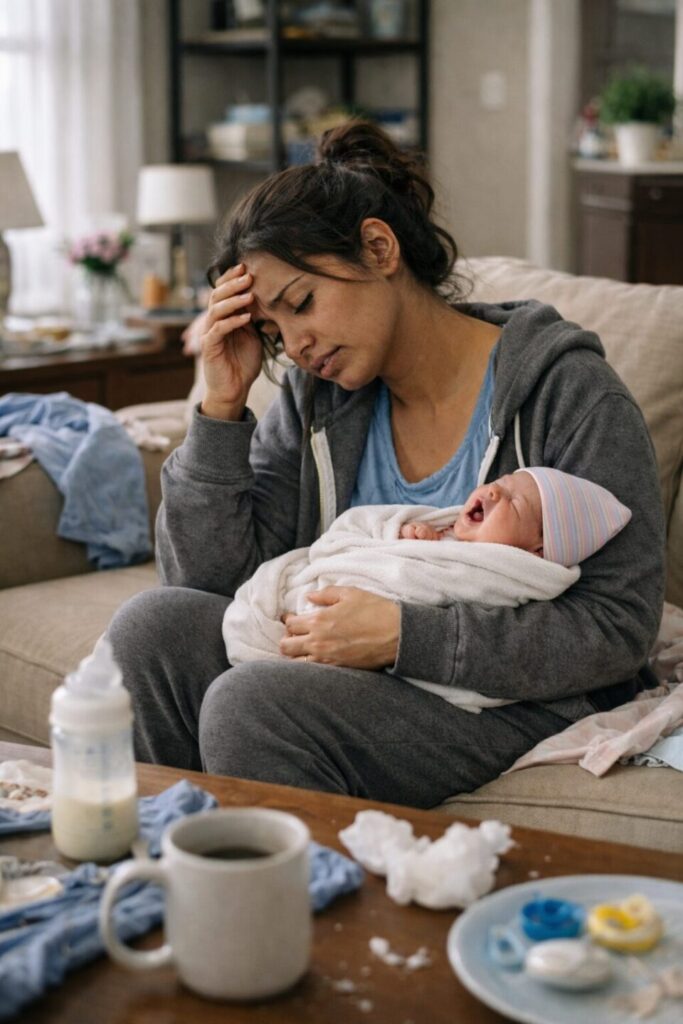
What can happen to a mother without postpartum support?
A mentor called me and shared that the young postpartum woman she was mentoring needed extra help. She had given birth to her first child, her family lived outside of Canada, and she had no support systems around her.
She didn’t have a proper bed for her baby to sleep in and didn’t know her baby couldn’t stay in the carseat all day and night.
She didn’t know her baby’s first hunger sign cues before she needed to feed him.
She had been accepted into an apprenticeship prior to becoming pregnant, and felt pressure to start in a few short weeks after delivery.
Aside from the social workers who occasionally visited, she was mostly alone with her baby.
This story is unfortunately all too common with mothers we support.
This mother isn’t a failure. She had given birth in a culture where most people live disconnected and most people don’t live their daily lives interwoven with others.
For most of human history, women have been supported by other women such as their own mother, or grandmother, aunt, sister, cousin, or neighbour to help develop a woman’s motherhood nature and ease the physical and emotional intensity of the process as well as pass on knowledge to the new mother. Unfortunately, for this new mother and her baby and so many others, she was at risk with high stakes and long-term ripple effects.
Risks for the mother
Mothers who are alone shoulder a lot. They bear the full economic and financial responsibility of providing for their children. They also shoulder the full responsibilities for parenting, including providing emotional, physical and behavioural support for the children and managing the daily operations of the household (e.g. finances, shopping, cooking, and cleaning). The cumulative weight of these responsibilities without consistent support places many mothers under significant and chronic stress.
Stress is typically divided into three categories of positive, tolerable, and toxic:
Positive stress is when we are activated during a stressful situation (e.g. our child falling and hurting themselves, driving in challenging road conditions) to help us adapt, stay alert and cope with the situation at hand. Once the event is over, the body returns to baseline.
Tolerable stress occurs when our nervous system is activated to a greater and more prolonged degree to events like a natural disaster or being in a car accident.
And toxic stress is when the threat response systems in our brain and nervous system are activated very intensely and frequently while facing prolonged adversity such as domestic violence, poverty, chronic parenting stress and burden without buffering relationships, and lack of access to shelter, food or safety.
When a mother of a newborn is living under intense ongoing stress without support to help buffer the load, overtime her stress can shift from something tolerable into something chronic. She is more at risk for developing mental health and physiological challenges such as postpartum depression and anxiety, dysregulation of cortisol (stress hormones), increased inflammation and sleep problems.
All of this leads to a reduced capacity to not only support her baby, but also her overall well being and satisfaction with life. She feels alone, without someone to ask questions about how to care for her baby or to speak into her life about what is normal and what is not. So she goes along as best she can, but the “best she can” continues to diminish because she is carrying so much on her own. And the ripple effects don’t stop with her; they continue to spread.

Risks for the baby
During the first 1000 days (from conception to approx. 2 years old) a baby is undergoing the most significant growth it will ever have in its life. In the womb, a baby shares many similar experiences to its mother: her nutrients, hormones and chemicals cross the placenta and impact the growing baby.
As Dr. Ira Chasnoff, leading researcher on child development and Fetal Alcohol Spectrum Disorder, writes,
“The baby is nourished by the same nutrients (and toxins) that the mother ingests and reacts neurologically to the hormonal and neurotransmitter secretions associated with the mother’s emotional state in the same way as the mother.” (p. 58, 2020)
From the prenatal experience a newborn will come into the world knowing the sound of its mother’s voice and be calmed by her touch, prefer sounds from stories they were read to in utero, and respond to conditions it experienced while in utero (e.g. changing behaviour for familiar songs heard in utero).
A newborn is not born passive. Over the course of development in the womb, the architectural foundations of its brain, nervous system, and body have already been laid. So when it enters the world, its built-in regulatory systems have already been shaped by its earliest experiences and continue to develop as it grows.
In fact, the first 90 days after a baby is born is considered the 4th trimester. The newborn is still neurologically immature and undergoing tremendous organization; its genes and the environment work together to shape how the brain and body will adapt to the world.
A pregnant mother who is living with chronic serious stressors is suffering, and is also bathing her baby in elevated stress hormones that impact the baby’s developing stress-regulation and defensive systems. After birth, this can show up as a lower threshold for stress, making it harder for the baby to settle, regulate, and be soothed. This can in turn make the family environment even more stressful for the mother, taxing her already limited capacity and increasing her risk for postpartum depression or anxiety.
What begins as biological stress exposure can quickly become a relational cycle: a stressed mother trying to care for a baby who is harder to soothe, while she herself has fewer supports to help her recover. Without support to interrupt this cycle, both mother and baby can remain in a state of heightened stress, increasing the risk of longer-term challenges for both. She wants to care for her baby and is doing the best she can with the capacity she has – but she has no margin.
So what will make the difference in this mother and child’s life? Someone to show up and help her.
This can positively change the trajectory of both hers and her child’s life; raising children was never meant to be done in isolation.

How parenting capacity develops
Becoming a parent is an incredibly transformative experience. The mother I was with my first child was very different from who I am with my fourth. By the time I had my fourth, I had already parented three other children through different developmental stages, so I was more relaxed and had a deeper knowledge of what was normal or cause for concern. Fortunately, for my fourth I was less neurotic and more at ease.
As for my oldest son, who will forever be my first, he continues to be my “guinea pig.” He is my trail blazing son and I’m the trail blazing mother, learning as we go together. I wish I could be more relaxed, but I simply don’t yet have the frame of reference that comes with experience. This is exactly why leading child psychiatrist Gabor Mate says, no child has the same mother twice.
This is also why having other parents who have gone before me has been so valuable. I lean on my own parents, who raised three children and are now in the grandparenting years. My extended family and friends with older children have also been a rich source of wisdom. When you are in the trenches of early parenting, it helps to have someone beside you who truly understands what you are going through. But it is equally important to have someone who functions more like a captain or guide, someone who has walked the road ahead and can say, I’ve been here before. This helped me. This is normal. Or simply, This too shall will pass
Unfortunately, many mothers today experience a poverty of relationships. They do not have access to the wealth of knowledge that once came naturally through mothers, grandmothers, aunts, cousins, neighbours, and other women who had already walked the path of parenthood. These relationships provided perspective, reassurance, and practical wisdom from those who were no longer in the trenches themselves and could offer a bird’s-eye view.
Because how do we learn to be a parent? Our motherhood nature is shaped through both our biology and environment. Some of it comes from our own temperament and lived experiences, but much of it is learned through observation, support, encouragement and – hopefully – being surrounded by people who help us grow into that role. Becoming a mother was never meant to be learned in isolation.

When postpartum support is missing in the first weeks, the impact lasts
A mentor once called me asking for help with a young mother she was supporting. The mother had just been admitted to hospital because her anxiety had become debilitating, and there were concerns she had relapsed in her addictions. At the hospital with the mentor, emergency team of nurses and doctors and mother they learned the mother didn’t know when she had last fed her baby, didn’t know her baby’s hunger signs, and didn’t even really know how to hold or soothe her baby.
The mother was struggling; she wanted to be a good mother but her mental health challenges had greatly reduced her capacity and she didn’t know how to read her baby’s cues or what to do when her baby became distressed.
There were many factors impacting this young mother. Her previous addictions history was being triggered, leaving her feeling helpless against cravings and overwhelmed with shame. Her feelings of being an inadequate mother in her ability to soothe and care for her baby were leading her to withdraw and disengage. And her baby became increasingly distressed because his needs weren’t being met, leading the young mother to feel stressed and like she was walking on eggshells.
Over time, these effects compound and put the mom at high risk for a condition called blocked care – a state where a parent feels emotionally shut down and doesn’t experience joy in parenting, and is simply going through the motions of caregiving. When this happens during the 4th trimester, when babies are at their most neurologically vulnerable, the risks extend beyond the child and the mother to the parent-child relationship and the developing family system.

Why does this matter so much?
Because babies learn so many fundamental things through relationship with their primary parent, typically their mother; self regulation, sensory integration, relationality. When a baby’s distress is consistently met with soothing touch, calm voices, and responsive care, the baby’s brain begins to associate caregivers with safety and comfort. Over time, this pairing helps build the baby’s stress-regulation systems.
When there is not enough of this pairing between distress and comfort – often not because of neglect, but because a parent is overwhelmed, unsupported or struggling themselves the baby’s stress response systems remain activated for much longer periods. Over time, the state a baby most frequently finds itself in, can begin to shape its trait.
When there is sufficient pairing between a parent’s soothing human touch (e.g., caressing, picking up, rocking) and voice (e.g., talking, cooing, calming, singing, humming) and a baby’s distress (e.g., hunger, fatigue, discomfort, gas), the baby learns to associate caregivers with comfort and safety. But when this pairing happens less consistently, the baby’s stress systems can stay activated longer. If we were to look under the hood of a baby’s brain, this can mean its cortisol and adrenaline remain elevated, while it experiences fewer opportunities for oxytocin, dopamine, and endorphins to be released in connection with its parents.
From a parenting perspective, newborns have such shrill and piercing cries because they are meant to distress us enough to mobilize us to soothe or help them. When babies cry, parents experience a surge of cortisol and adrenaline that activates their stress response. But when parents are unable to soothe their baby, because they don’t know how, they never get a break, or they have diminished capacity due to their own mental health struggles, they may not experience the important release of oxytocin (which helps them feel close and connected), dopamine (which contributes to pleasure and motivation), and endorphins (the body’s natural opioids that help us feel calm and well) that normally comes through successful caregiving interactions.
And again we need to come back to the concept mentioned earlier; the states that a baby or parent finds themselves frequently in can become their trait.
How does this realistically play out? There are many ways of how this can unfold in real life, so I’ll highlight several:
- A parent who consistently has trouble soothing their baby overtime loses confidence in their abilities which makes them feel like a failure as a parent which feels unbearable, so they unintentionally emotionally disengage and shut down. Underneath this is deep shame but it feels too vulnerable to address. They might even start to resent or dislike their baby.
- Or a different parent who consistently has trouble soothing their baby becomes increasingly anxious and hypervigilant; they remove or stop anything that might cause their baby distress and end up running themselves ragged because they try to keep their baby happy and calm; their sleep is impacted and overtime their capacity is diminished.
- Or a single mother has a toddler and young child; she feels alone and overwhelmed much of the time because she has no close friends or family. When her third baby comes along, she just brings the baby along wherever she needs to be with her toddler and young child (or she is busy attending to them), so she misses the cues of her baby. Over time, she thinks the baby is “so good” but in reality so many cues have been missed that the baby stops vocalizing their cues because they have learned their needs probably aren’t going to be met.
Of course mental health is complex and I don’t want to sound deterministic. Just because you had a hard start to life, does not mean you or your child are destined for poverty or instability in relationships.
And at the same time, the states that we find ourselves in most frequently become the foundation of our traits; it puts us on a certain trajectory.
Stress often begets more stress. As we have addressed early life stress profoundly shapes the development of a baby for mental and physical health.
Maternal mental health is also a key predictor of child outcomes related to their mental health, behaviour regulation, attachment and relationships, later school functioning and substance use risk. And isolation is one of the strongest risks for maternal mental health – when mothers lack proper social support they are more at risk for not only postpartum depression and anxiety, but later depression, burnout and family breakdown.
For adults who are struggling with addictions and homelessness, there is a substantial body of research pointing to impactful early life stresses (also known as adverse childhood experiences, ACES) such as serious attachment disruptions, chronic childhood stress and lack of safe adults.
This is why postpartum support is not just a “nice to have” – it is ultimately prevention work.

Begin with postpartum support if you want to help the world.
I believe, if you want to help the world, begin with families. Strong families ultimately create strong communities which create strong societies.
Care For Women intervenes at the start of life building the systemic infrastructure to support overwhelmed mothers and reduce adverse experiences for both mother and child.
With the heart of our program being social support we aim to help struggling mothers who are overwhelmed and feeling isolated.
We want mothers to feel capable and confident in their mothering abilities. The likelihood of this happening occurs when two things happen. For a mom to feel capable, her basic needs must be met – she needs to sleep if she is sleep deprived, she needs to heal from delivery, she needs to eat nutritious food to help her body heal and replenish so she has energy. For a mom to feel confident, she needs to have someone she can talk to, bounce ideas off of, learn from who has gone before her “in the trenches” and made it to the other side.
While postpartum essentials, postpartum kits, and services like postpartum massage can support physical recovery, they cannot replace the role of consistent human support. Whether through a postpartum doula, a mentor, or a strong community, mothers need more than tools – they need people.
Becoming a mother is a transformative experience. The stakes are high for both a baby and mother as they grow and develop (each in their own way). It was never meant to be done alone, so this is why I work towards a world where mothers and babies feel supported.
If this resonates with you – consider joining our team of volunteer mentors who practically and emotionally help mothers or consider donating to ensure we can provide care to mothers in need.






0 Comments